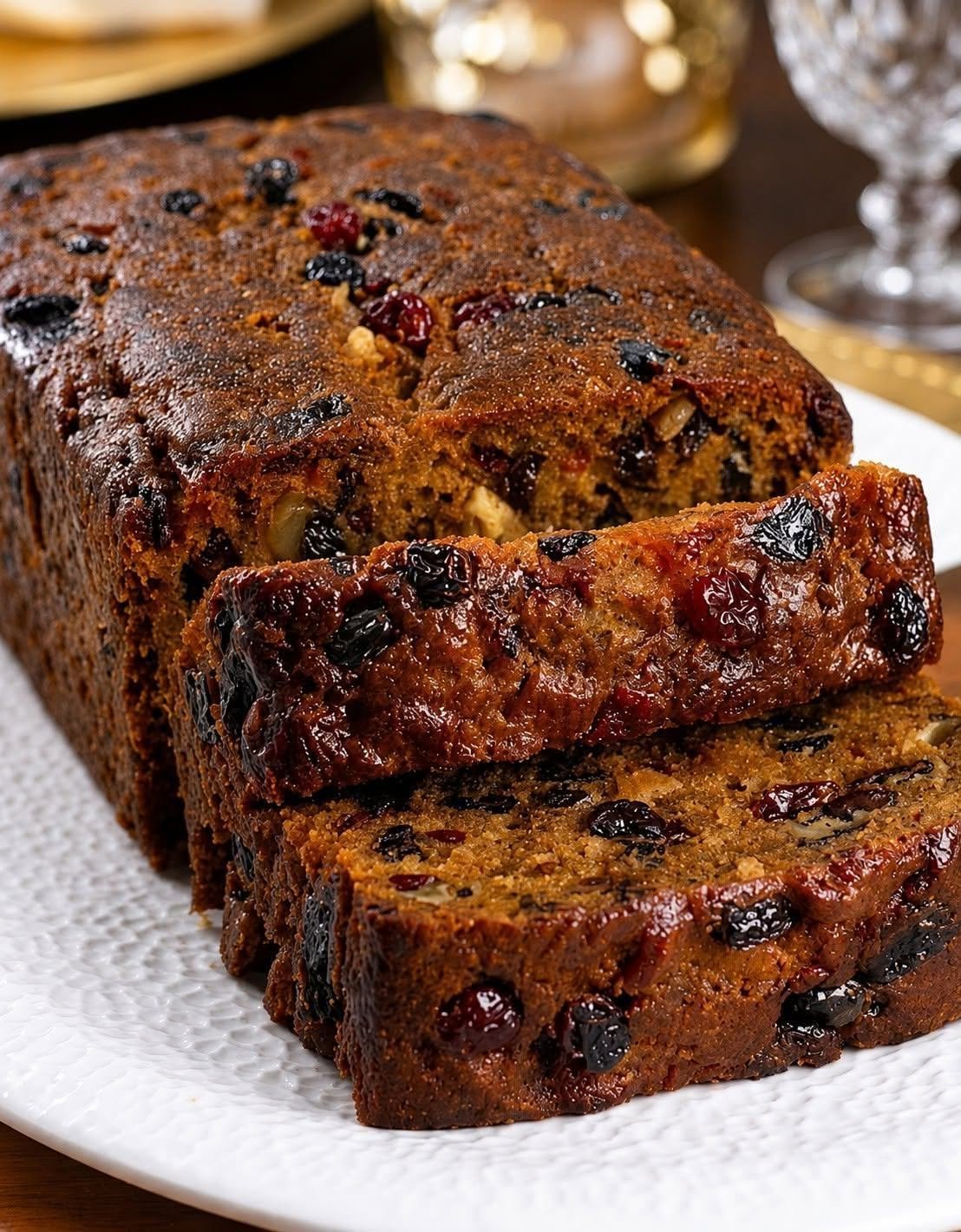
A traditional fruit cake is a rich, moist cake packed with dried fruits, nuts, warm spices, and a buttery vanilla-scented batter. The fruit is soaked before baking, allowing it to become plump and juicy while adding wonderful depth of flavor to the finished cake.
This recipe produces a beautifully moist fruit cake with a tender crumb and a rich, aromatic flavor. It can be enjoyed fresh, but the flavor becomes even better after resting for a few days.
Prep Time
30 minutes
Soaking Time
Overnight, preferably
Baking Time
1 hour 45 minutes–2 hours 15 minutes
Total Time
About 2 hours 45 minutes, plus soaking and resting
Servings
12–16 slices
Ingredients
For the Fruit Mixture
- 1 cup (150 g) raisins
- 1 cup (150 g) sultanas
- ¾ cup (120 g) chopped dates
- ½ cup (75 g) dried cranberries
- ½ cup (75 g) chopped dried apricots
- ½ cup (75 g) chopped candied orange peel
- ½ cup (75 g) chopped glace cherries
- 1 cup (240 ml) orange juice
- ½ cup (120 ml) brandy, rum, or additional orange juice
For an alcohol-free fruit cake, simply use orange juice or apple juice instead of alcohol.
For the Cake Batter
- 1 cup (225 g) unsalted butter, softened
- ¾ cup (150 g) brown sugar
- ¼ cup (50 g) granulated sugar
- 4 large eggs, room temperature
- 2 teaspoons vanilla extract
- 2 tablespoons molasses or dark treacle
- 2½ cups (315 g) all-purpose flour
- 1 teaspoon baking powder
- ½ teaspoon baking soda
- ½ teaspoon salt
- 2 teaspoons ground cinnamon
- 1 teaspoon ground ginger
- ½ teaspoon ground nutmeg
- ¼ teaspoon ground cloves
- ½ teaspoon allspice
- ½ cup (60 g) finely ground almonds or almond flour
- ½ cup (120 ml) milk
For the Nuts
- ¾ cup (90 g) chopped walnuts
- ½ cup (60 g) chopped almonds
- ¼ cup (30 g) chopped pecans, optional
Instructions
1. Soak the Fruit
Place the raisins, sultanas, dates, dried cranberries, dried apricots, candied orange peel, and glace cherries in a large bowl.
Pour over the orange juice and brandy or rum.
Stir well, cover the bowl, and refrigerate overnight.
For the best traditional flavor, allow the fruit to soak for 12–24 hours. Stir it once or twice during soaking so all the fruit absorbs the liquid evenly.
If you are short on time, place the fruit and liquid in a saucepan and gently warm for 5–7 minutes. Remove from the heat, cover, and let it stand for at least 1 hour.
2. Prepare the Baking Pan
Preheat the oven to 300°F (150°C).
Grease a deep 8-inch (20 cm) round cake pan or a 9-inch (23 cm) square cake pan.
Line the bottom and sides with parchment paper.
For a particularly rich fruit cake, use two layers of parchment around the sides to help prevent the edges from becoming too dark during the long baking time.
3. Prepare the Dry Ingredients
In a medium bowl, whisk together the flour, baking powder, baking soda, salt, cinnamon, ginger, nutmeg, cloves, and allspice.
Stir in the ground almonds.
Set aside.
4. Cream the Butter and Sugar
Place the softened butter, brown sugar, and granulated sugar in a large mixing bowl.
Beat with an electric mixer for approximately 3–4 minutes, until the mixture becomes lighter and creamy.
This step helps incorporate air into the batter and contributes to a tender cake.
5. Add the Eggs
Add the eggs one at a time, beating well after each addition.
If the mixture looks slightly curdled, don’t worry. It will come together when the dry ingredients are added.
Add the vanilla extract and molasses or dark treacle and mix until combined.
6. Add the Dry Ingredients
Add approximately one-third of the flour mixture to the butter mixture.
Mix gently.
Add half of the milk and mix again.
Continue alternating the dry ingredients and milk, finishing with the dry ingredients.
Do not overmix. Stop as soon as the batter is evenly combined.
7. Add the Fruit and Nuts
Drain the soaked fruit if there is a large amount of remaining liquid. Reserve a few tablespoons of the soaking liquid if desired for brushing the finished cake.
Add the soaked fruit, walnuts, almonds, and pecans to the batter.
Fold everything together gently using a large spatula.
Make sure the fruit and nuts are distributed evenly throughout the batter.
8. Fill the Cake Pan
Transfer the batter to the prepared pan.
Use a spatula to smooth the top.
Make a small shallow depression in the center of the batter. This helps the cake bake more evenly and reduces the formation of a large dome.
Tap the pan gently on the countertop once or twice to remove any large air pockets.
9. Bake Slowly
Place the cake in the center of the preheated oven.
Bake for approximately 1 hour 45 minutes to 2 hours 15 minutes.
The exact baking time depends on the depth of the pan and your oven.
Begin checking the cake after about 1 hour 40 minutes.
Insert a wooden skewer or cake tester into the center. It should come out clean or with a few moist crumbs attached. The cake should also feel firm in the center.
If the top is becoming too dark before the cake is fully baked, loosely cover it with aluminum foil.
10. Cool the Cake
Remove the cake from the oven and allow it to cool in the pan for approximately 20–30 minutes.
Carefully lift it from the pan and transfer it to a wire rack.
Allow the cake to cool completely before wrapping or decorating.
11. Optional Fruit-Cake Feeding
For a richer traditional fruit cake, brush the cooled cake with 1–2 tablespoons of brandy, rum, or orange juice.
Wrap the cake tightly in parchment paper followed by aluminum foil.
Store it in a cool place.
If using alcohol, you can feed the cake once every 1–2 weeks by brushing a small amount of brandy or rum over the surface.
Allowing the cake to mature for 1–4 weeks develops an even deeper flavor.
For an alcohol-free version, use orange juice sparingly and keep the cake refrigerated.
Tips for the Perfect Traditional Fruit Cake
Don’t Skip the Fruit Soaking
Soaking allows the dried fruit to absorb moisture and become soft and plump. It also prevents the fruit from drawing moisture out of the cake while baking.
Use Room-Temperature Ingredients
Room-temperature butter and eggs combine more easily and create a smoother batter.
Bake at a Low Temperature
Fruit cake contains a large amount of fruit and sugar, so it benefits from slow baking. A moderate-low oven helps the center cook without burning the outside.
Protect the Edges
If your cake pan is dark or your oven runs hot, use an additional layer of parchment around the pan. You can also place a baking sheet underneath the cake pan to reduce direct heat.
Let It Mature
Although you can eat the cake as soon as it cools, traditional fruit cake often tastes better after resting for several days. The spices, fruit, nuts, and cake become more harmonious with time.
Alcohol-Free Version
To make a completely alcohol-free fruit cake, replace all brandy or rum with orange juice, apple juice, or strong black tea.
Soak the fruit overnight, bake as directed, and store the finished cake in an airtight container in the refrigerator.
Serving Suggestions
Slice the fruit cake thinly and serve with tea or coffee.
For a festive presentation, decorate the top with whole almonds, pecans, glace cherries, or a thin layer of marzipan.
It is also delicious served slightly warm with a small amount of butter or alongside vanilla ice cream.
Storage
Once completely cool, wrap the cake tightly in parchment paper and then foil.
An alcohol-based fruit cake can be stored in a cool, dry place for several weeks, provided it is properly wrapped and periodically checked.
For an alcohol-free cake, refrigerate it in an airtight container and consume it within approximately 1–2 weeks.
The cake can also be sliced and frozen for up to 3 months. Wrap individual slices well and thaw them at room temperature before serving.
Final Result
The finished traditional fruit cake should be rich, moist, fragrant, and generously filled with colorful dried fruit and crunchy nuts. The combination of brown sugar, citrus, cinnamon, ginger, nutmeg, cloves, and vanilla gives it the warm, classic flavor associated with traditional holiday baking.
For the best flavor, make it several days—or even weeks—ahead of serving and allow the cake to mature properly. The longer it rests, the more developed and delicious the flavor becomes.

