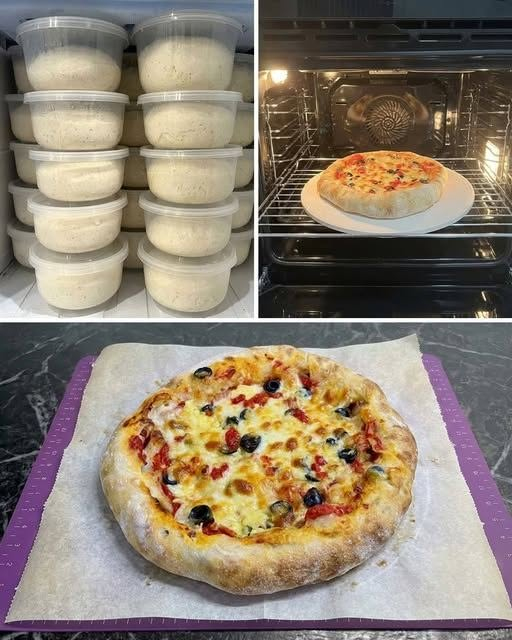
This easy Sourdough Discard Pizza has a crisp, golden crust with a soft, chewy center and delicious tangy flavor. It is an excellent way to use sourdough discard, especially when you have extra starter left over after feeding.
The dough comes together with simple ingredients and can be baked the same day. For even more flavor and a beautifully developed crust, you can also refrigerate the dough overnight.
Prep Time
20 minutes
Resting Time
1–24 hours
Baking Time
10–15 minutes
Total Time
About 1 hour 30 minutes for same-day pizza
Servings
2 medium pizzas
Ingredients
For the Pizza Dough
- 1 cup (240 g) sourdough discard, preferably 100% hydration
- 2 cups (250 g) all-purpose or bread flour
- ½ cup (120 ml) warm water
- 1 tablespoon olive oil
- 1 teaspoon honey or sugar
- 1 teaspoon salt
- ½ teaspoon instant yeast, optional
The optional yeast makes the dough rise more quickly and is useful when you want to bake the pizza on the same day. If you prefer a slower, more traditional sourdough approach, omit it and allow the dough more time to ferment.
For the Topping
- ½ cup (120 g) pizza sauce
- 1½–2 cups (150–200 g) shredded mozzarella cheese
- ½ cup sliced bell peppers
- ½ cup sliced mushrooms
- ¼ cup sliced black or green olives
- ¼ cup thinly sliced red onion
- Fresh basil, optional
- 1–2 tablespoons grated Parmesan
- 1 tablespoon olive oil
- Red pepper flakes, optional
- Dried oregano, to taste
You can replace the vegetables with pepperoni, cooked chicken, sausage, roasted vegetables, or any toppings you enjoy.
Instructions
1. Combine the Sourdough Discard and Water
Add the sourdough discard and warm water to a large mixing bowl.
Stir until mostly combined.
Add the olive oil and honey or sugar.
If using instant yeast, add it at this stage as well.
2. Add the Flour and Salt
Add the flour and salt.
Mix with a wooden spoon or sturdy spatula until a rough dough forms.
The dough may look slightly sticky at first.
Let it rest for about 10 minutes. This short rest allows the flour to absorb the water and makes the dough easier to handle.
3. Knead the Dough
Transfer the dough to a lightly floured surface.
Knead for approximately 5–7 minutes, or until the dough becomes smoother and more elastic.
You can also knead it in a stand mixer fitted with a dough hook for about 4–5 minutes on low-medium speed.
The dough should feel soft and slightly tacky but should not be extremely sticky.
If the dough feels very wet, add flour one tablespoon at a time.
Avoid adding too much flour because a stiff dough can produce a dense crust.
4. Let the Dough Rise
Place the dough in a lightly oiled bowl.
Cover it with plastic wrap or a clean kitchen towel.
If using instant yeast, let it rise in a warm place for approximately 60–90 minutes, or until noticeably puffy.
For a yeast-free version, allow the dough to ferment at room temperature for approximately 4–8 hours, depending on the strength and activity of your sourdough starter.
The dough does not necessarily need to double in size. Look for a noticeable increase in volume and a lighter, airier texture.
5. Divide the Dough
Turn the dough onto a lightly floured surface.
Divide it into two equal portions.
Shape each portion into a loose ball by gently folding the edges underneath.
Cover the dough balls and let them rest for 15–20 minutes.
This relaxation period makes the dough much easier to stretch.
6. Preheat the Oven
Place a pizza stone, pizza steel, or heavy baking sheet in the oven.
Preheat to the highest temperature your oven safely allows, ideally around 475–500°F (245–260°C).
Allow the stone or steel to heat for at least 30–45 minutes.
A thoroughly heated baking surface is one of the secrets to getting a crisp pizza crust.
7. Shape the Pizza
Take one dough ball and place it on a lightly floured surface.
Gently press the dough outward using your fingertips, leaving a slightly thicker border around the edge.
Continue stretching until you have a circle approximately 10–12 inches (25–30 cm) in diameter.
Avoid using a rolling pin if you want a light, airy crust because rolling can press out the gas that developed during fermentation.
Transfer the shaped dough to a piece of parchment paper or a lightly floured pizza peel.
8. Add the Sauce and Toppings
Spread approximately ¼ cup of pizza sauce over the dough.
Leave about ½ inch (1 cm) around the edge for the crust.
Sprinkle generously with mozzarella.
Add your chosen vegetables or other toppings.
Finish with Parmesan, oregano, red pepper flakes, and a small drizzle of olive oil.
Don’t overload the pizza. Too many toppings can make the center wet and prevent the crust from becoming crisp.
9. Bake
Carefully transfer the pizza to the preheated pizza stone, steel, or baking sheet.
Bake for approximately 10–15 minutes, depending on the temperature of your oven and the thickness of the crust.
The pizza is ready when:
- The cheese is melted and bubbling.
- The crust is golden brown.
- The bottom is crisp and lightly browned.
- The edges are puffed.
For an extra-browned top, switch to the broiler for the final 1–2 minutes, watching carefully so it doesn’t burn.
10. Finish and Serve
Remove the pizza from the oven and allow it to rest for approximately 2–3 minutes.
Scatter fresh basil over the top.
Add a small drizzle of extra-virgin olive oil and a pinch of red pepper flakes if desired.
Slice with a pizza cutter and serve hot.
Overnight Sourdough Discard Pizza
For deeper sourdough flavor, omit the instant yeast.
Prepare the dough as directed, then cover it and place it in the refrigerator for 12–24 hours.
The following day, remove the dough from the refrigerator and let it sit at room temperature for approximately 1–2 hours before shaping.
Cold fermentation develops a more complex flavor and can produce a beautifully crisp and chewy crust.
Tips for the Best Sourdough Discard Pizza
Use Active or Recently Fed Discard
Discard doesn’t have to be freshly fed, but it should smell pleasantly sour or yeasty. Avoid discard that has developed mold or an unusual rotten smell.
Get the Oven Very Hot
Pizza loves high heat. A thoroughly preheated pizza stone or steel helps the crust cook quickly and become crisp before the toppings release too much moisture.
Don’t Overload the Pizza
A thin layer of sauce and a moderate amount of cheese usually produces a better crust than a heavily loaded pizza.
Give the Dough Time to Relax
If the dough keeps shrinking when you stretch it, stop and let it rest for another 10–15 minutes. The gluten will relax, making shaping much easier.
Use a Pizza Steel for Maximum Crispness
A pizza steel transfers heat extremely efficiently and can produce a particularly crisp bottom crust.
Easy Homemade Pizza Sauce
For a quick sauce, combine:
- ½ cup crushed tomatoes
- 1 tablespoon olive oil
- ½ teaspoon dried oregano
- ¼ teaspoon garlic powder
- ¼ teaspoon salt
- Pinch of black pepper
Mix everything together and use immediately.
There’s no need to cook the sauce before putting it on the pizza.
Topping Ideas
Classic Margherita
Use pizza sauce, mozzarella, fresh basil, Parmesan, and olive oil.
Spicy Veggie
Top with mozzarella, bell peppers, red onion, mushrooms, jalapeños, and red pepper flakes.
Chicken Garlic
Use cooked chicken, mozzarella, roasted garlic, red onion, and a small amount of Parmesan.
Mediterranean
Try mozzarella, olives, roasted peppers, red onion, feta, and oregano.
Storage and Reheating
Leftover pizza can be refrigerated in an airtight container for up to 3–4 days.
For the crispiest reheating, place slices in a skillet over medium heat and cover for a few minutes until the bottom becomes crisp and the cheese melts.
You can also reheat pizza in a 400°F (200°C) oven for approximately 5–8 minutes.
Avoid microwaving if you want to preserve the crispy crust.
Final Result
This Sourdough Discard Pizza produces a wonderfully crisp crust with a soft, chewy interior and the characteristic tang of sourdough. It is a practical and delicious way to use leftover starter while creating homemade pizza with restaurant-style flavor.
For the best combination of flavor and texture, try the overnight fermentation method, bake on a thoroughly preheated pizza stone or steel, and keep the toppings relatively light.

